INFO
All additional works listed here will be carried out with precision, professionalism and within the agreed timeframe. By using modern building materials, we guarantee that your home will be completed very quickly and, above all, cost-effectively, without compromising on quality or durability.
We have divided the work into several steps, so that you can build with us on an almost ‘turnkey’ basis, or carry out all or part of the construction work yourself. If you wish to order only the HOUSE KIT, we support all builders with a free construction plan for the foundations and the house, as well as tips on the construction, procurement and installation of all necessary materials.
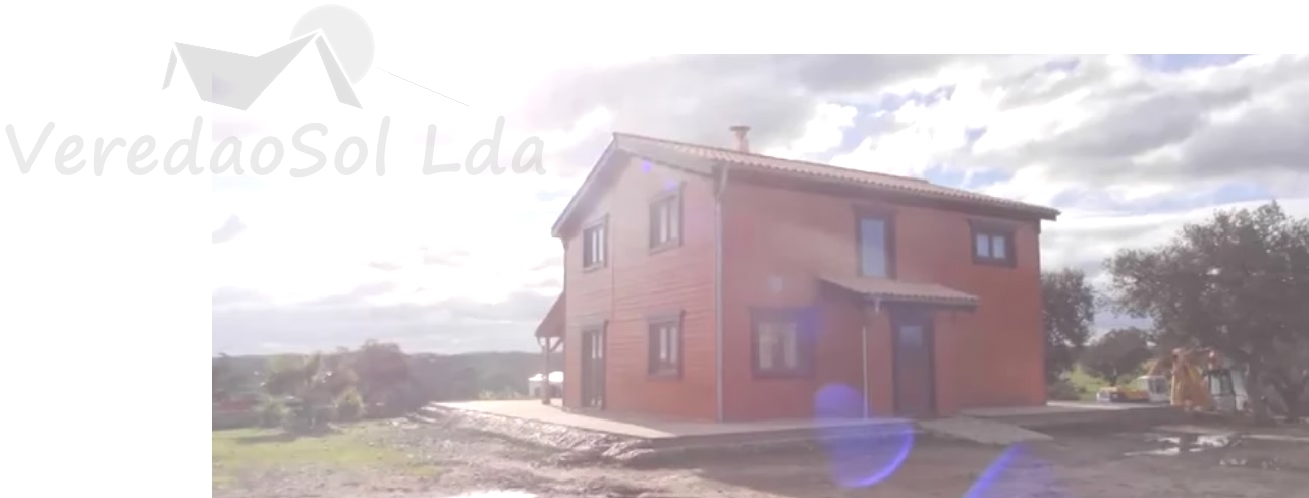
Click to explore the gallery
Initial step
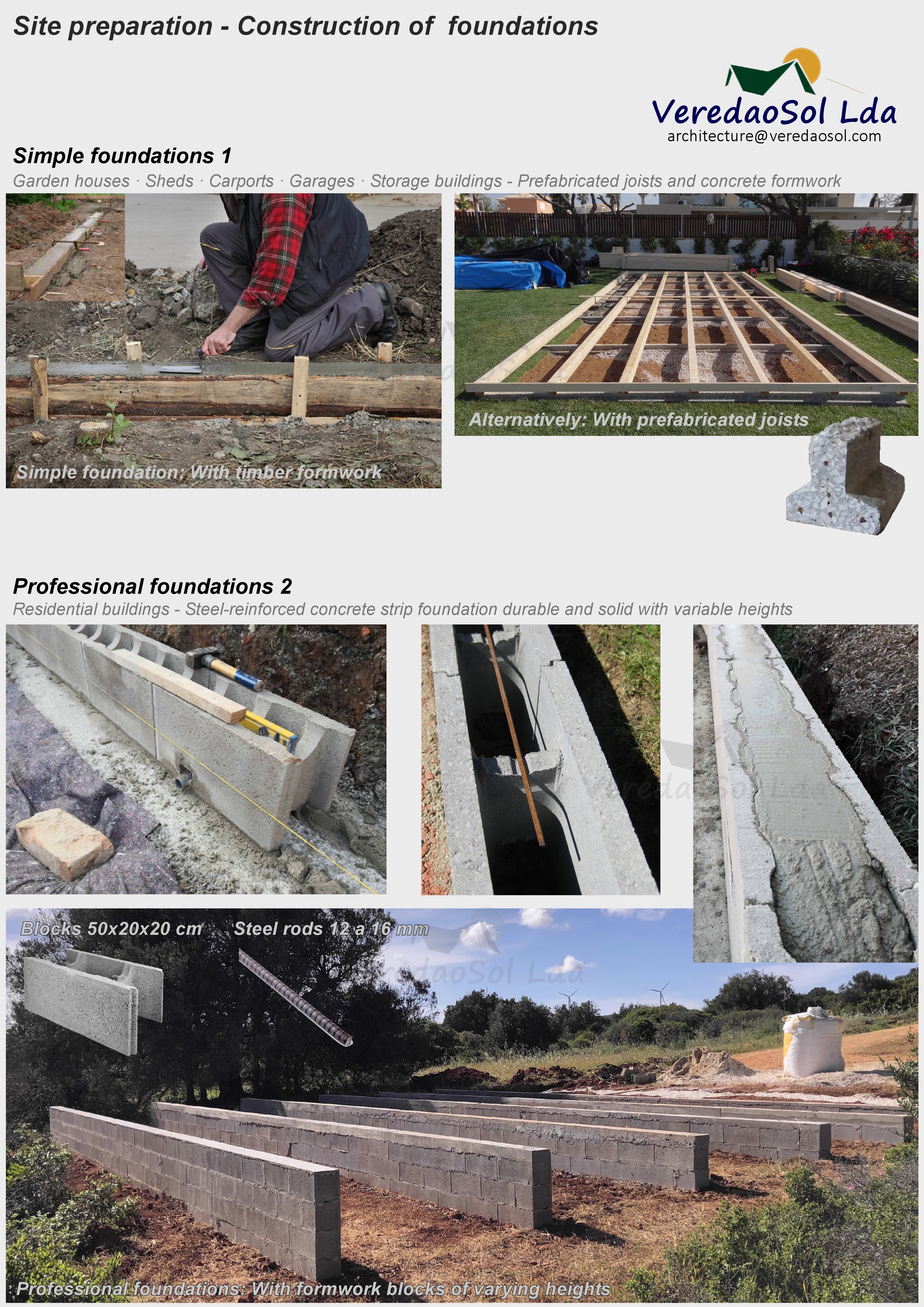
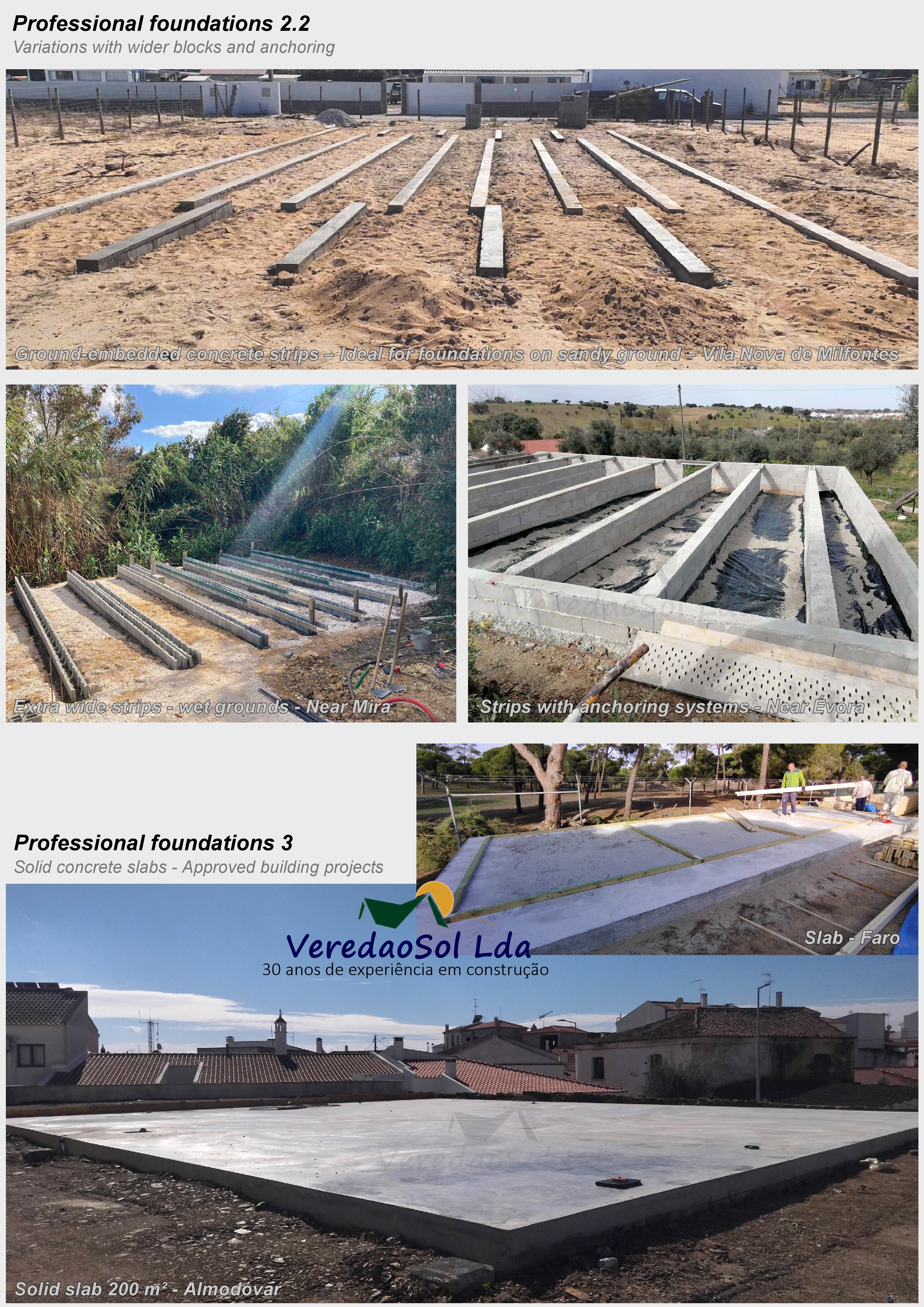
The most important step in ensuring the stability of an investment is to create a sustainable long-term foundation on which the investment can grow. For this reason, when building a house, it is also essential to ensure a solid foundation capable of supporting the structure for many years to come. In short: a solid foundation is the secure starting point for a stable, profitable and sustainable investment in a building.
In the FOUNDATIONS section, we show you how you can achieve this goal quickly, securely and cost-effectively. Of course, there are other ways to build a foundation. However, our decades of experience in house building show that all other options, with the exception of concrete slabs, are neither more stable nor more cost-effective and, unfortunately, can cause recurring problems over time.
The type of foundation we are about to introduce to you offers the following advantages:
It is suitable for all types of ground, whether rocky, sandy, damp or sloping.
The embedded reinforcement bars, together with the concrete, support a weight that far exceeds the total weight of the house once it is completed.
(In contrast, for example, point foundations with steel piles, which, depending on the characteristics of the ground and weather conditions, may, over time, sink at various points, as experience shows. This applies particularly when an insufficient number of steel piles have been used.)
The value for money of a strip foundation is, ultimately, significantly better than that of other types of foundations with lower load-bearing capacity, with the exception of concrete slabs.
Do the maths:
The total construction and material costs for strip foundations amount to an average of just 34.90€ m² of living space, plus VAT.
Finaly it is important to bear the following in mind:
Concrete strip or steel pile foundations are subject to exactly the same building regulations. Unlike concrete slabs, which are 100% subject to planning permission, as conrete slabs completely seal off the ground. Whereas concrete strip and steel pile foundations do not seal the ground.
Construction work on a standard strip footing for a living area of up to 150 m² takes, on average, a maximum of 3 days. Fixing the steel piles may take longer, especially in rocky ground. The standard height of strip foundations is 20 to 30 cm and can be extended to a height of up to 2 meters.
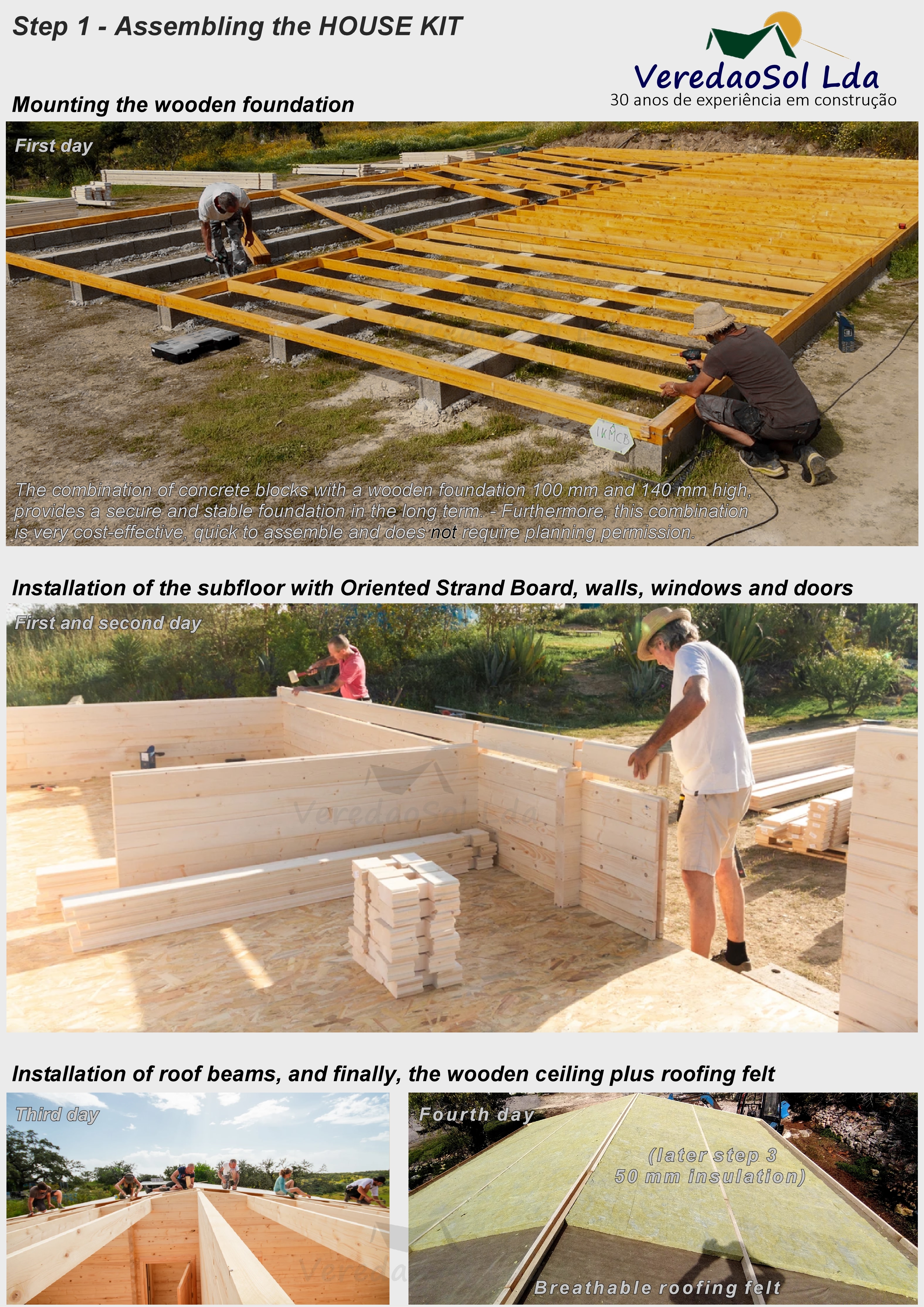
This includes the assembly of the ordered HOUSE KIT, comprising timber foundation beams, OSB subfloor panels, walls, doors, windows, roof beams and roof boards, on top of a pre-built foundation. For example, on a strip foundation with long-term load-bearing capacity, which have already built. Assembly work on the HOUSE KIT is completed within 3-4 working days. Finally, a breathable membrane is installed on the roof, so that the house is protected from the rain for the next 6 weeks and you have sufficient time to install the necessary roof covering yourself.
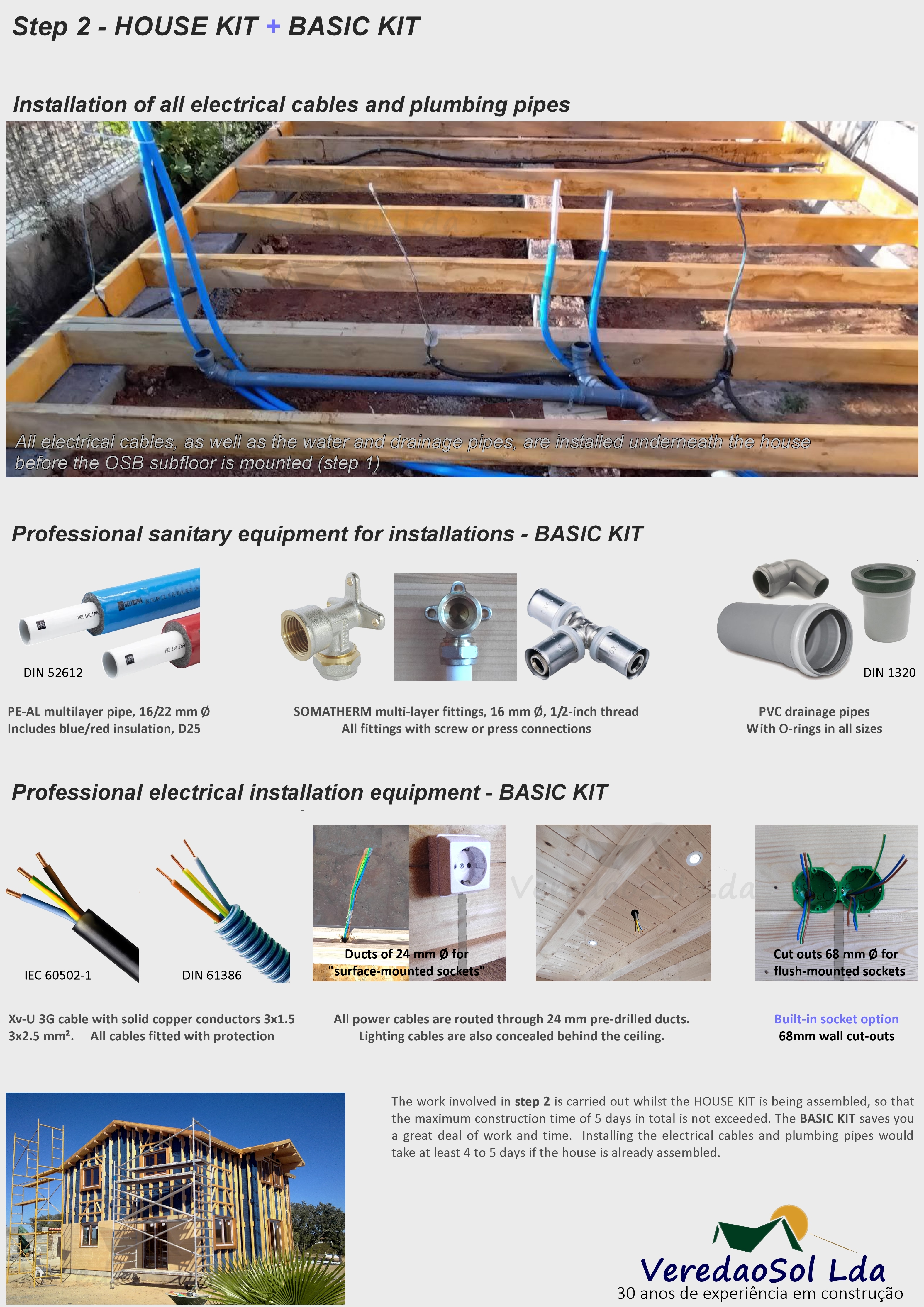
This includes all the basic work required for the necessary electrical and plumbing connections. We install all the electrical cables for future sockets and ceiling lights, as well as for additional appliances such as water heaters and ovens, and all the water and waste pipes for connecting future sanitary facilities. The work in step 2 is carried out during the ASSEMBLY KIT, so as not to exceed the maximum construction time of 5 days in total. The BASIC KIT save you a lot of work and time, as the electrical and plumbing installations would otherwise take at least 4 to 5 days after the house has been build.
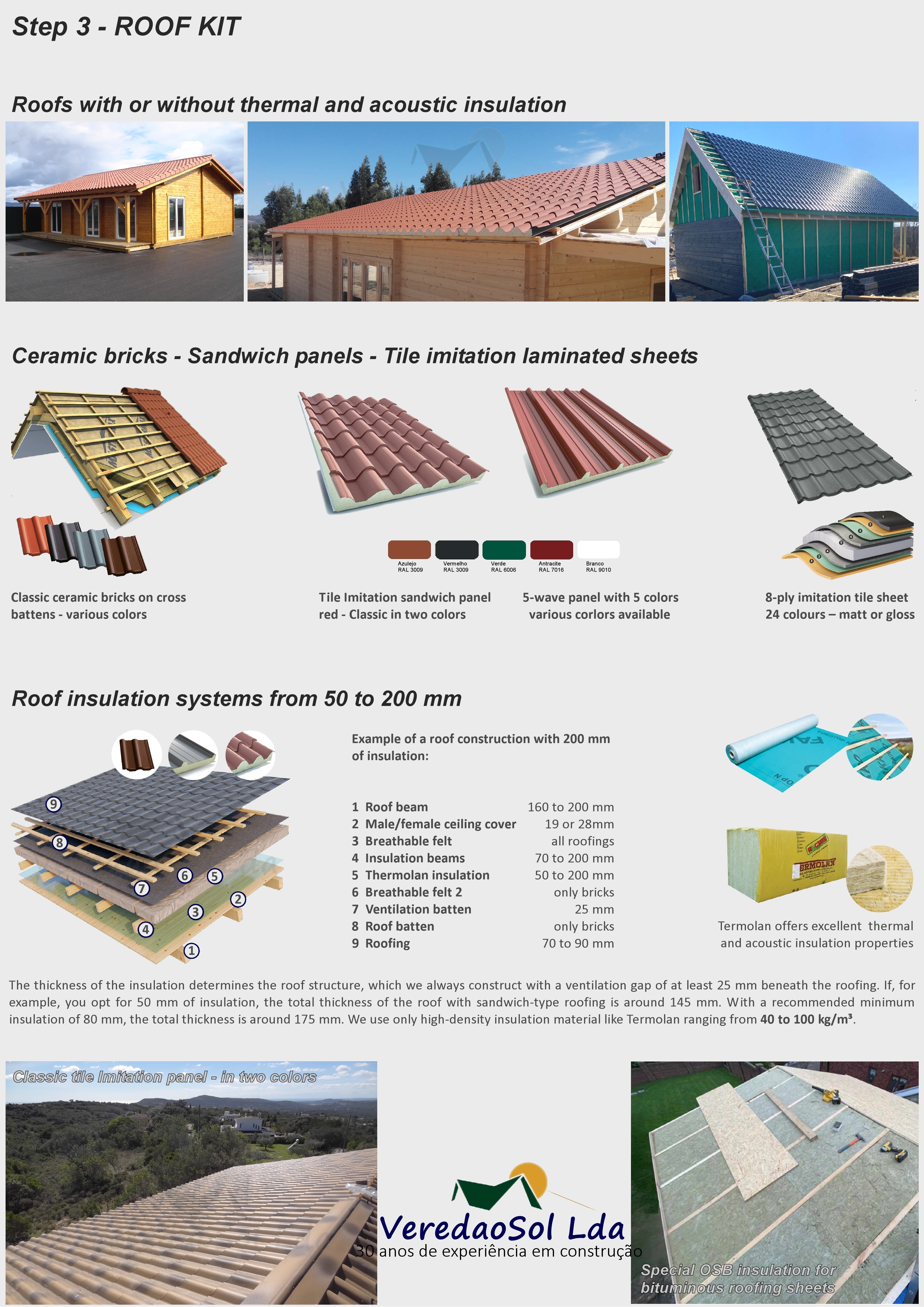
Now that the electrical cabling in the roof area has also been installed, we can, if desired, assemble the complete roof, in addition to the step 2. The standard ROOF KIT, includes a roof covering with a 5-wave sandwich panel and rear-ventilated roof insulation with a minimum thickness of 50 mm. The roof is thus insulated not only thermally but also acoustically. Other options, such as classic bricks, sandwich or sheet imitation tiles, thermal plus acoustic insulation up to 200 mm, complete the kit. The building is now protected in the long term from rain and stormy weather. Exterior painting and interior finishing work can be carried out any time later.
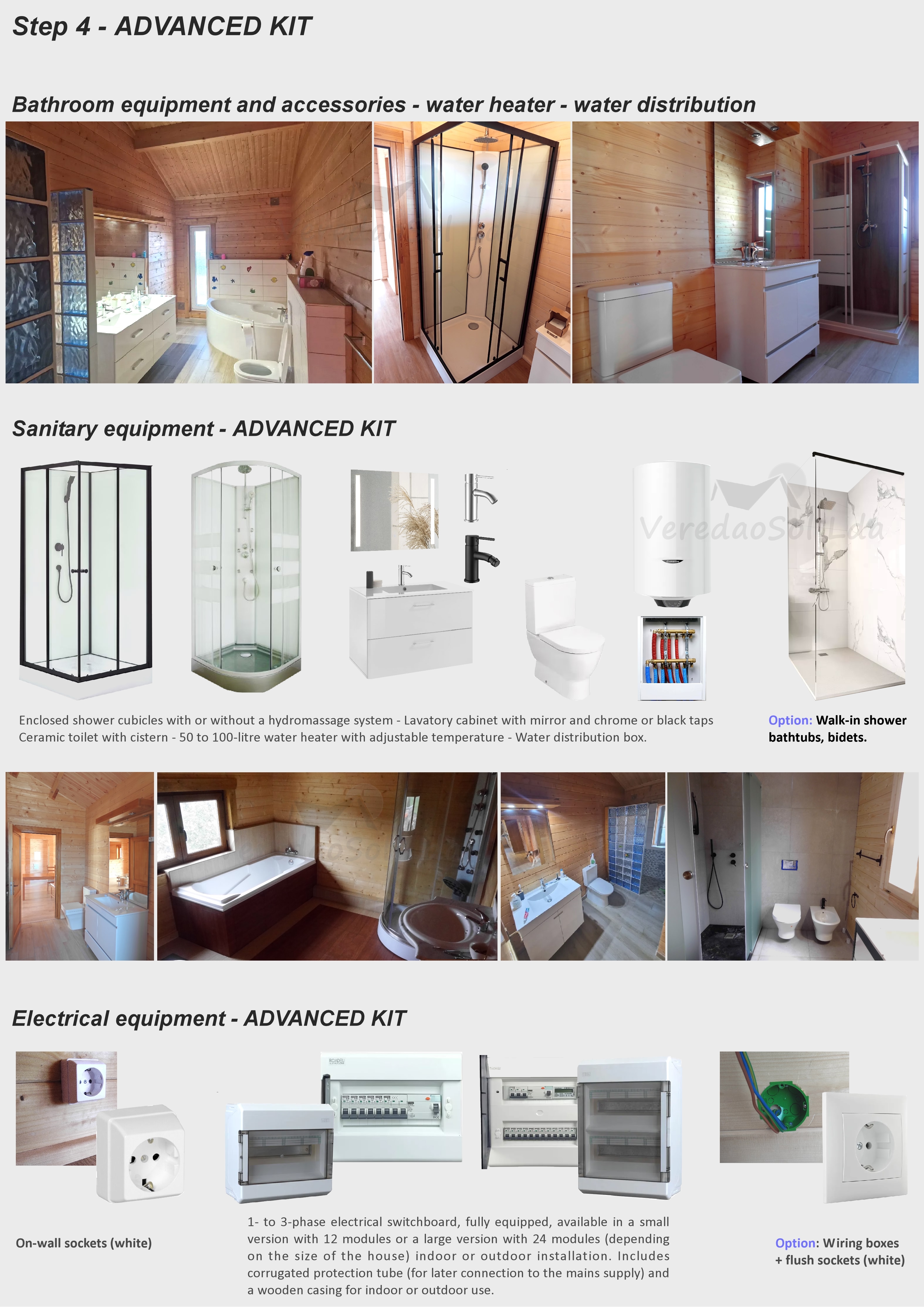
This includes the more complex work and materials required to make a house ready to move into. For example, the complete installation of the electrical systems, fuse box and sockets - the water supply and water heater - the full fit-out of the bathrooms with an enclosed shower cubicle, toilet and washbasin. (To enable the installation of the bathroom objects, we first install a waterproof laminate in the bathrooms.) The work in step 4 takes, on average, a further 10 working days. Additional options can be selected, such as the assembly of walk-in showers, bathtubs, bidets and underfloor heating.
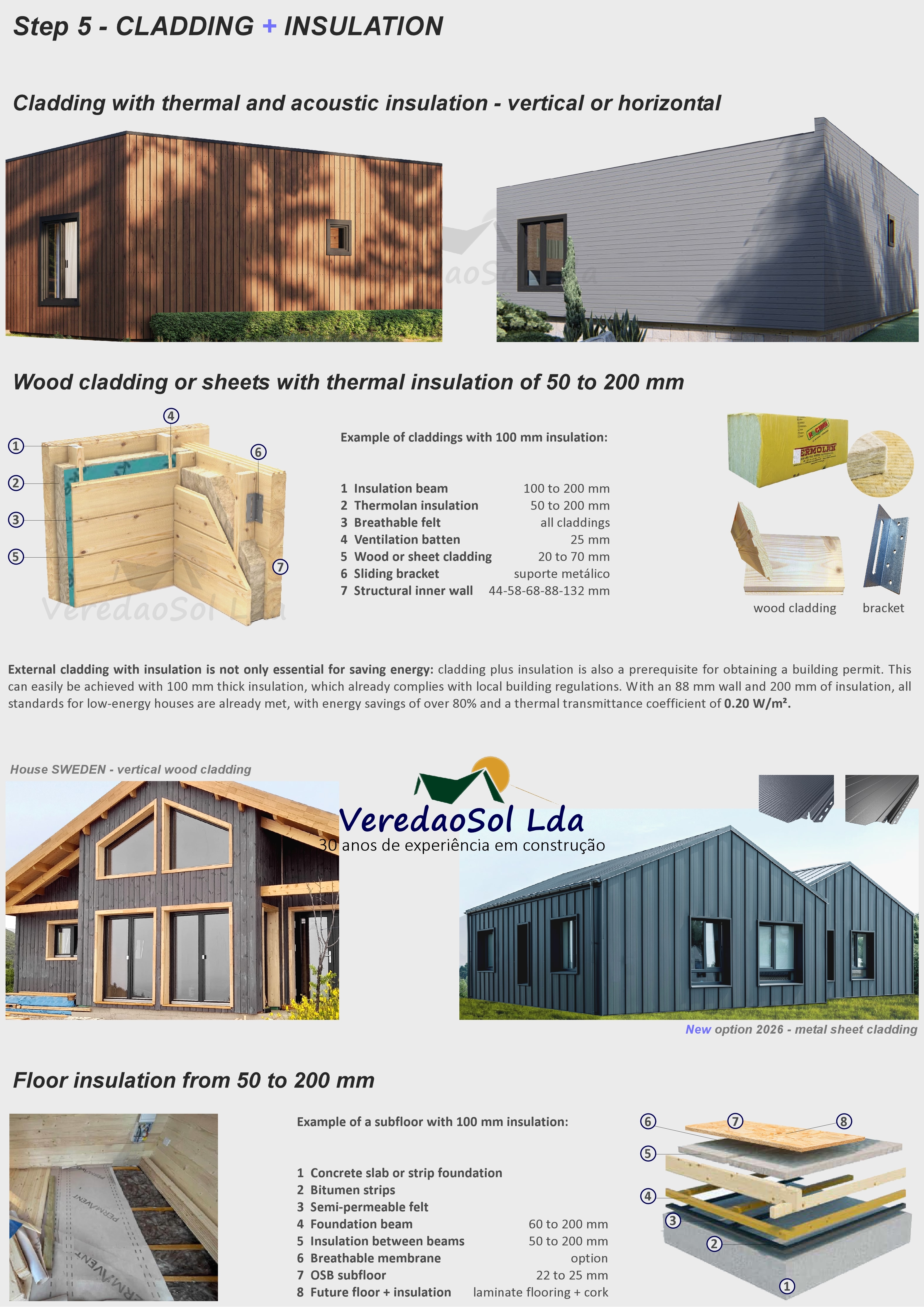
Depending on the type of construction, an additional external wall may be required, particularly to provide optimal protection for a timber house against adverse weather conditions, such as heavy rain. 100% protection against rain is only guaranteed in timber houses with walls at least 88 mm thick. Although most houses with walls of 58 to 68 mm do not experience problems during heavy rain, tall gable walls in particular should be fitted with an additional cladding, which can be constructed with or without insulation. Additional external claddings, with or without insulation, and floor insulations, are described in Step 5. The cladding can be installed either directly or at a later date. In buildings with a building permit, an external cladding with 100 mm of insulation is required to comply with Portuguese building regulations.
We would be happy to advise you...
Click to explore our latest-generation solar systems